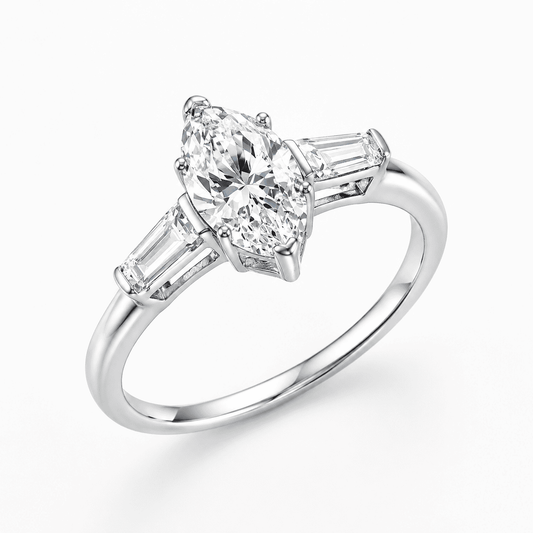
Moissanite Care
Does Your Moissanite Look Cloudy?
Moissanite does not normally turn permanently cloudy. If its sparkle looks muted, the most likely cause is a removable layer of oil, soap, lotion, or mineral residue on the stone or beneath its setting.

The short answer: A moissanite that suddenly looks cloudy is usually coated with everyday buildup. Warm water, mild dish soap, a very soft brush, and careful drying can restore its brilliance. If the haze remains, looks rainbow-colored, sits beneath the stone, or appears after an impact, stop experimenting and ask a qualified jeweler to inspect it.
Why does moissanite sometimes look cloudy?
Moissanite is valued for high brilliance and fire. Its optical properties do not simply disappear during ordinary wear. What changes is often the surface through which light must travel. Finger oils, hand cream, sunscreen, soap, cosmetics, and cooking residue can form a thin layer that scatters light before it enters or leaves the stone.
Buildup also collects underneath a center stone, particularly in settings with an open gallery. When the pavilion is coated, the ring can look gray or flat even if the top appears reasonably clean. Hard-water minerals and dried soap may leave a pale film around prongs and in small spaces that a quick wipe cannot reach.
Moissanite is also doubly refractive. Depending on cut, viewing angle, and lighting, its rear facet junctions may look doubled or slightly soft. The Gemological Institute of America (GIA) explains that this optical doubling can make the interior appear blurry. That appearance is a property of moissanite, not necessarily cloudiness or damage.
First, identify what you are actually seeing
Useful test: View the clean, dry ring in diffused daylight and then under a single indoor light. Surface buildup usually affects the entire sparkle pattern; a fixed mark stays in the same location as the ring moves.
How to clean a cloudy-looking moissanite safely

Inspect the ring before cleaning
Check for a loose stone, bent prong, cracked accent, or misshapen band. If anything moves or catches, skip home cleaning and take the piece to a jeweler.
Prepare a gentle solution
Mix lukewarm water with a few drops of mild dish soap in a small bowl. Avoid very hot water and work away from an open drain. This gentle approach is consistent with GIA's guidance for cleaning fine gemstone jewelry, which favors mild soap and a soft brush over harsh household products.
Let the residue soften
Place the ring in the solution briefly so oils and dried soap can loosen. The goal is gentle degreasing, not a long chemical soak.
Brush with a light touch
Use a new, very soft toothbrush or jewelry brush. Clean the top, sides, underside, and spaces around the prongs. Support the ring by its band and never force the brush beneath a delicate setting.
Rinse and dry carefully
Rinse in a separate bowl of clean water rather than directly over a sink. Pat dry with a clean lint-free cloth and allow hidden moisture to air-dry before storage.
Recheck under neutral light
When the ring is completely dry, inspect it again. If brilliance returns, the issue was surface buildup. If not, professional cleaning or examination is the next step.
For a fuller routine covering both moissanite and sterling silver, follow Dreamall's Jewelry Care Guide.
What should you avoid?
| Avoid | Why |
|---|---|
| Toothpaste and abrasive powders | They can scratch or dull the metal even when the moissanite itself is hard. |
| Bleach and strong household cleaners | They may attack alloys, plating, solder, or delicate parts of the setting. |
| Unknown acidic cleaners | A product suitable for one material may be unsafe for the complete ring. |
| Hard-bristle brushes | They can scratch metal and place unnecessary force on small prongs or pavé beads. |
| Picking residue with metal tools | This can scratch the setting or move a prong. |
| Uninspected ultrasonic cleaning | Vibration can worsen an existing loose setting. Professional inspection should come first. |
Special note on oil-slick film: Moissanite manufacturer Charles & Colvard describes an organic surface film that can create blue, brown, or rainbow-like patches. Do not aggressively polish the entire ring with an abrasive cloth, especially when the setting is plated. If mild soap does not remove the film, follow advice appropriate to the complete piece or ask a jeweler.
When does cloudiness need professional attention?
Arrange a professional inspection when the appearance does not improve after careful cleaning, when a fixed white mark seems to sit inside or beneath the stone, or when the ring recently experienced a hard impact or high heat. You should also stop wearing the ring if the stone moves, a prong catches, or small accent stones appear uneven.
A jeweler can examine the setting under magnification, identify residue in inaccessible areas, and decide whether professional cleaning is appropriate. This matters because the safest method depends on the entire piece: center stone, accent stones, metal, plating, solder, and setting condition.
Moissanite is highly durable at 9.25 on the Mohs scale, but durability does not make every setting maintenance-free. Learn more in Can You Wear Moissanite Every Day? and compare its characteristics in the Moissanite Quality Guide.
Frequently asked questions
Does moissanite permanently turn cloudy?
Under normal wear, no. A sudden loss of sparkle is more likely to be surface buildup or residue beneath the setting. Persistent marks should be professionally assessed rather than scrubbed more aggressively.
Can lotion make moissanite look cloudy?
Yes. Lotion, sunscreen, cosmetics, and skin oils can coat the stone and collect around the prongs. Put jewelry on after beauty products have dried and clean it gently when buildup appears.
Why does my moissanite look cloudy only in some lighting?
Diffused daylight, spot lighting, cut style, facet doubling, and surrounding colors all change how brilliance appears. Compare the clean, dry ring in more than one neutral lighting condition.
Can I use an ultrasonic cleaner?
The moissanite material may tolerate normal ultrasonic cleaning, but the complete ring may not. Loose stones, delicate pavé, treated accent gems, older settings, or plating can require different care. Professional inspection is the safer choice.
How often should I clean my moissanite ring?
Clean it when visible buildup reduces sparkle rather than following an aggressive schedule. Daily habits such as removing the ring before lotions, cleaning, swimming, and messy work can reduce how often deeper cleaning is needed.
Bring the brilliance back gently
Most cloudy-looking moissanite needs careful cleaning, not harsh treatment. Keep the routine simple, protect the setting, and ask a professional whenever the cause is uncertain.
Sources and editorial note: This guide draws on gemological information from the Gemological Institute of America, GIA's jewelry-cleaning guidance, and Charles & Colvard's moissanite-care guidance.
Cleaning needs vary by gemstone treatments, metal, plating, setting, and condition. When in doubt, consult a qualified jeweler before using specialized cleaners or equipment.